Special paints such as fluorescent, phosphorescent, and invisible fluorescent paints open entirely new possibilities for mural artists. With these materials, an ordinary wall can be transformed into a dynamic composition that changes depending on the lighting conditions. In this article, we explain what luminescent murals are, what types of special paints can be used, and how to design and execute a project to achieve maximum visual impact.
Table of Contents
What are luminescent murals
Types of special paints used in murals
The mural creation process step by step
Inspirations: murals in daylight and UV light
Practical tips for artists and designers
What are luminescent murals
Luminescent murals are artworks that change their appearance depending on the type of light. By day, they resemble traditional colorful wall art. At night – under UV lamps or black light – they reveal a completely new dimension. Fluorescent paints glow with high intensity, while phosphorescent paints store energy and emit light in the dark. These effects make the colors appear deeper, sharper, and more vibrant, turning a mural into a visual spectacle. Luminescent murals are often used in public spaces, clubs, art galleries, or commercial interiors to attract attention and create a unique atmosphere that engages viewers in different ways depending on the setting.
Types of special paints used in murals
- There are several categories of special paints that artists can use to design luminescent murals:
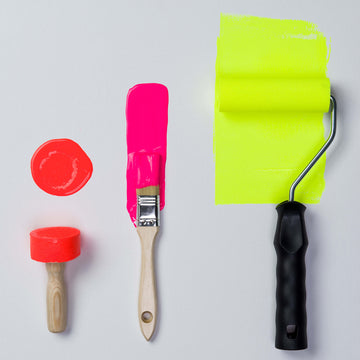
- Fluorescent paints – glow vividly under UV light, creating intense and energetic color accents.
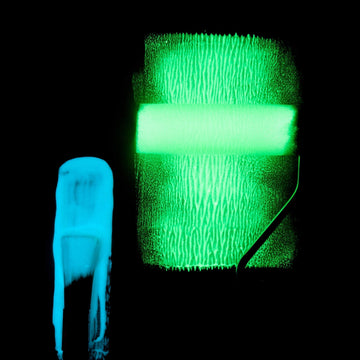
- Phosphorescent paints – absorb daylight and glow in the dark, revealing hidden elements at night.
- Metallic paints – add shine, depth, and reflective qualities that stand out under artificial light.
- Thermochromic paints – change color with temperature, enabling interactive mural elements.
By combining these effects, artists can produce highly original compositions. For example, fluorescent outlines might appear bold under UV, while phosphorescent highlights remain invisible until the lights go out, creating layered visual experiences.
The mural creation process step by step
Designing a luminescent mural requires careful planning. The process usually begins with a detailed sketch, broken down into layers and masks for precise color application. Artists then select paints depending on the desired dual effect – visible in daylight and transformed under UV. Fluorescent paints are typically used for bold color blocks, while phosphorescent paints emphasize hidden elements. Techniques such as airbrushing are ideal for smooth gradients, seamless transitions, and saturated color intensity. The surface preparation is equally important: clean, primed, and light-colored bases help fluorescent pigments shine at their brightest. Each step must consider how the mural will look in both lighting conditions, making this type of artwork a blend of technical skill and artistic experimentation.
Inspirations: murals in daylight and UV light
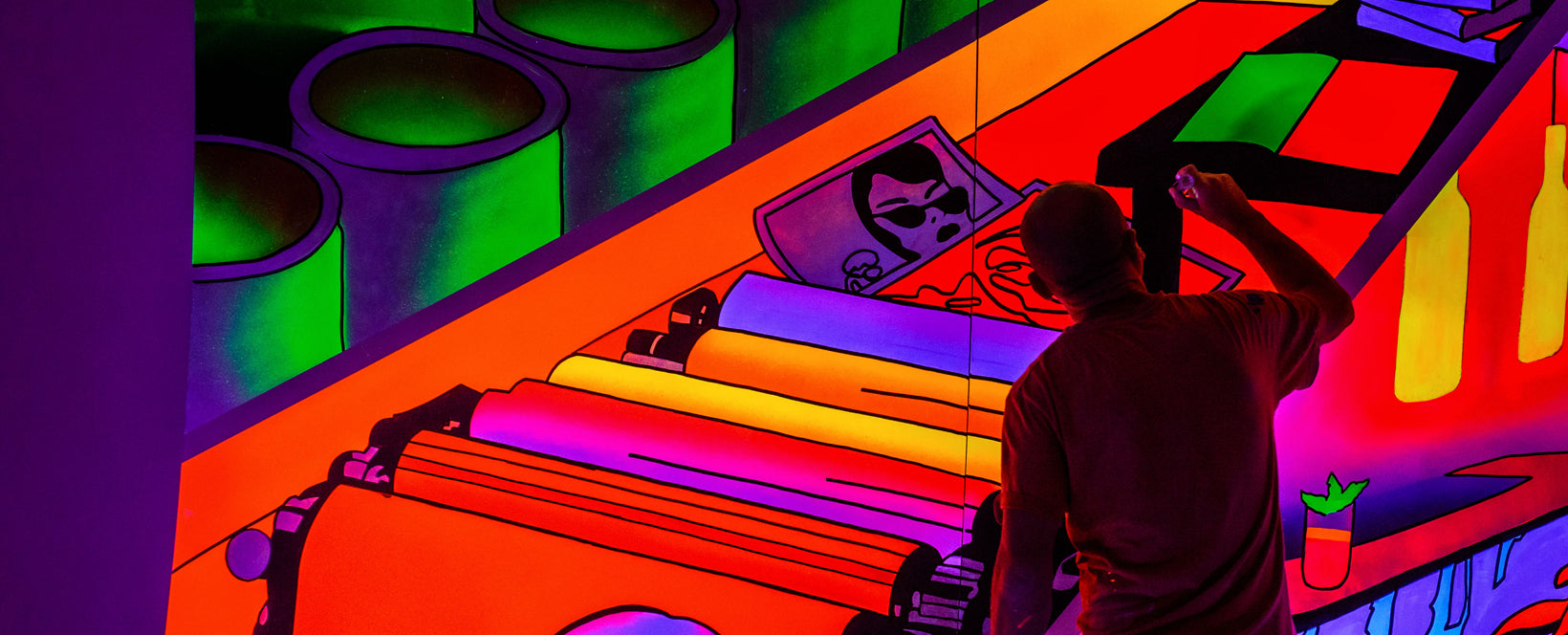
The dual nature of luminescent murals is what makes them so impressive. In daylight, they function as vibrant, graphic compositions – colorful and expressive. When UV lights are switched on, the same murals transform into glowing artworks, with certain elements appearing sharper, brighter, and more surreal. Shades such as fluorescent yellow, pink, green, and blue create striking contrasts that enhance the impact of the overall design. This duality allows the mural to act as an interactive installation: it attracts viewers during the day while surprising them with a completely different experience at night. In clubs, bars, and cultural spaces, this transformation often becomes the key point of the venue's visual identity.
Practical tips for artists and designers
- Prepare two design versions: one for daylight and one for UV light, to control how the mural works in both scenarios.
- Apply fluorescent paints on light-colored surfaces to maximize brightness and contrast.
- Combine multiple effects – fluorescence, phosphorescence, metallic shine – for layered and multidimensional results.
- Always use high-quality paints to ensure durability, color stability, and a strong luminescent effect over time.
- Remember that luminescent murals are not limited to public walls; they work equally well indoors in clubs, bars, hotels, and galleries.